Commercial mold remediation covers mold in offices, retail space, restaurants, warehouses, schools and apartment buildings, where the affected area is usually large and the building has to keep operating. Texas licensing rules apply the same way, with a separate assessor writing the protocol. Call the number on this page to be connected with a local mold company in San Antonio.
How commercial jobs differ
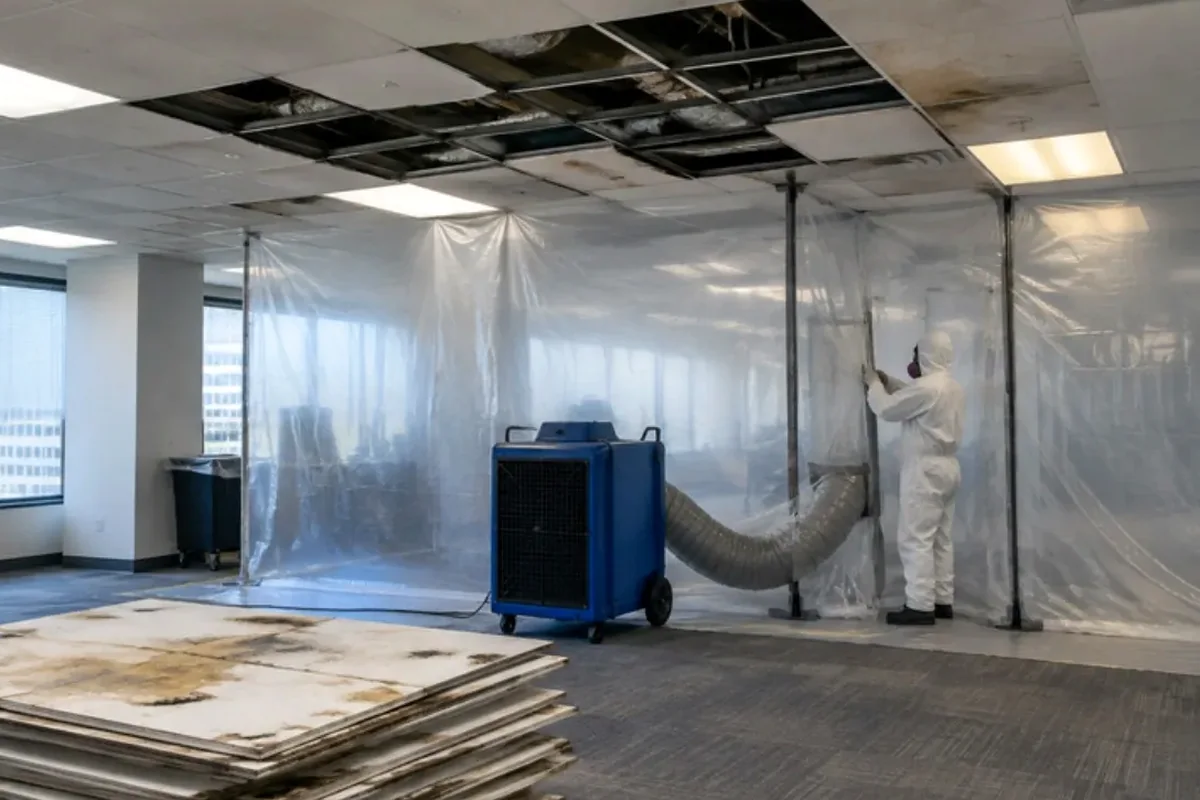
A commercial property rarely has one room to fix. Growth may sit above a ceiling grid, behind vinyl wall covering, in a rooftop air handler or along a shared wall between tenants. Work is usually phased so a restaurant kitchen, a clinic waiting room or a retail floor can reopen quickly, and the company has to plan around occupants, deliveries and building systems.
Common causes around San Antonio
Flat roofs and failed flashing let summer thunderstorms soak insulation and ceiling tile. Large commercial HVAC units in hot weather produce plenty of condensation, and a blocked drain pan can wet a plenum for months. Older strip centers and warehouses near creeks or low-lying drainage can take on water during flash floods, and a burst pipe after a rare hard freeze can go unnoticed in a vacant unit.
The Texas process
TDLR rules require a mold assessment consultant to write a project-specific protocol and a remediation contractor to follow it with a customized work plan. Both must reach the client at least one calendar day before work starts. A person generally cannot do both assessment and remediation on the same project, so expect two separate companies. Owners and building staff have some exemptions, but a contractor holding a TDLR license is not exempt on small projects.
Planning around tenants and operations
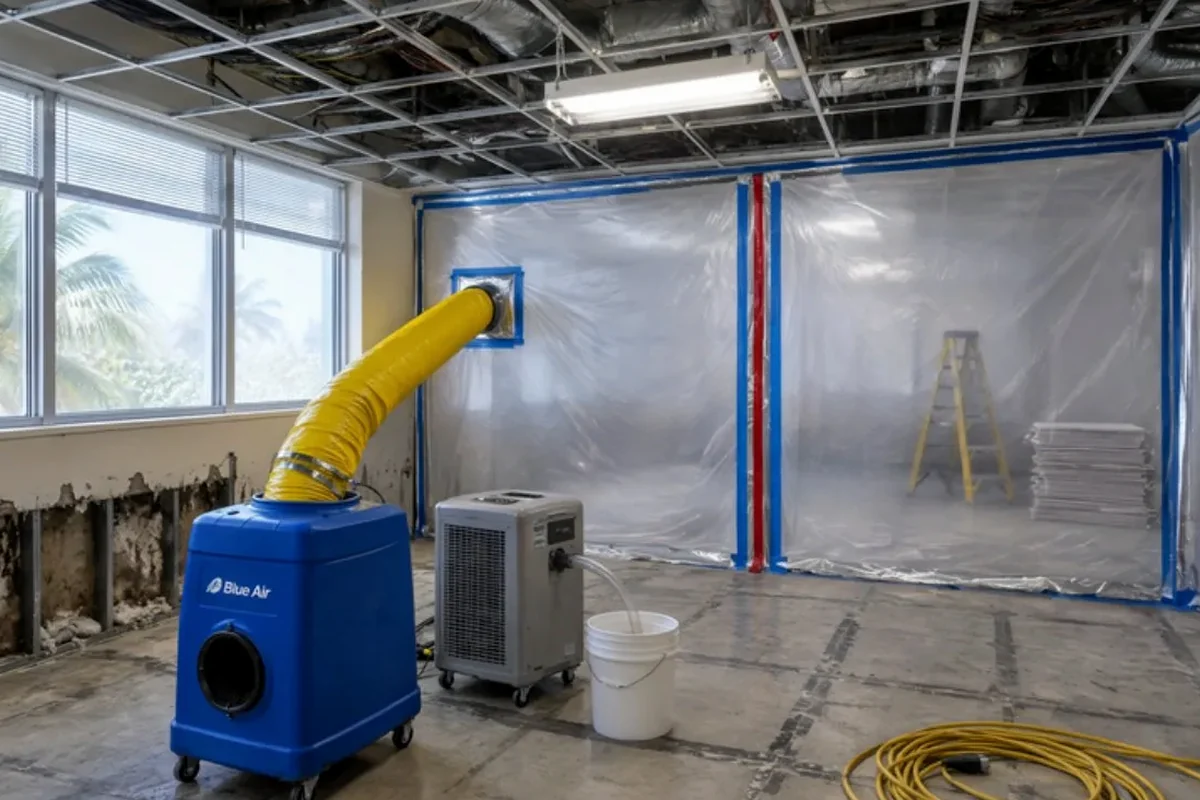
Ask early who must be notified. Multi-unit and leased buildings often involve property managers, tenants and sometimes insurers, and each may want the protocol and schedule in writing. Restaurants and clinics may need health-department or lease sign-off before reopening, so build that into the timeline.
What the work looks like
- Assessment with moisture mapping and a written protocol.
- Containment with negative air machines and controlled entry points.
- Removal of affected ceiling tile, drywall, insulation and other porous finishes.
- HEPA cleaning, drying and a post-remediation assessment by a different consultant.
Cost and permits
Commercial pricing varies with square footage, ceiling height, containment and after-hours scheduling, and the cost sources on file do not publish a commercial figure. As a rough scale marker only, one San Antonio guide lists about $9,600 to $19,100 for 1,000 square feet of residential-type remediation. If rebuilding follows, permits come from the San Antonio Development Services Department inside the city, or Bexar County Public Works in unincorporated areas.
Commercial Mold Remediation questions from San Antonio homeowners
Does a commercial property need a TDLR mold license holder in Texas?
Can the same company assess and remediate my building?
Can my business stay open during remediation?
Who handles permits after the cleanup?
Related mold services in San Antonio
Helpful guides
Commercial Mold Remediation in nearby cities and towns
Bexar County
Comal County
Guadalupe County
Kendall County
Medina County
Bandera County
Sources
Last updated: